Finding a sunscreen that works on oily Indian skin is genuinely hard. Most formulas leave a white cast, feel like a greasy film, or pill under makeup within an hour. The result? Most Indians skip SPF entirely — and that is the single biggest skincare mistake you can make. UV damage causes 80% of visible skin ageing, worsens acne marks, and triggers pigmentation. This guide covers the best SPF 50 sunscreens available on Amazon India in 2026 that are formulated specifically for oily, acne-prone skin — no white cast, no grease, no excuses.
TL;DR — Quick Summary
✓Oily skin needs gel or fluid sunscreens, not creams — look for 'aqua gel', 'fluid', or 'water-light' textures
✓SPF 50 with PA++++ rating is the Indian dermatologist standard for daily use
✓White cast is caused by mineral filters (zinc oxide/titanium dioxide) — new-gen chemical filters eliminate it completely
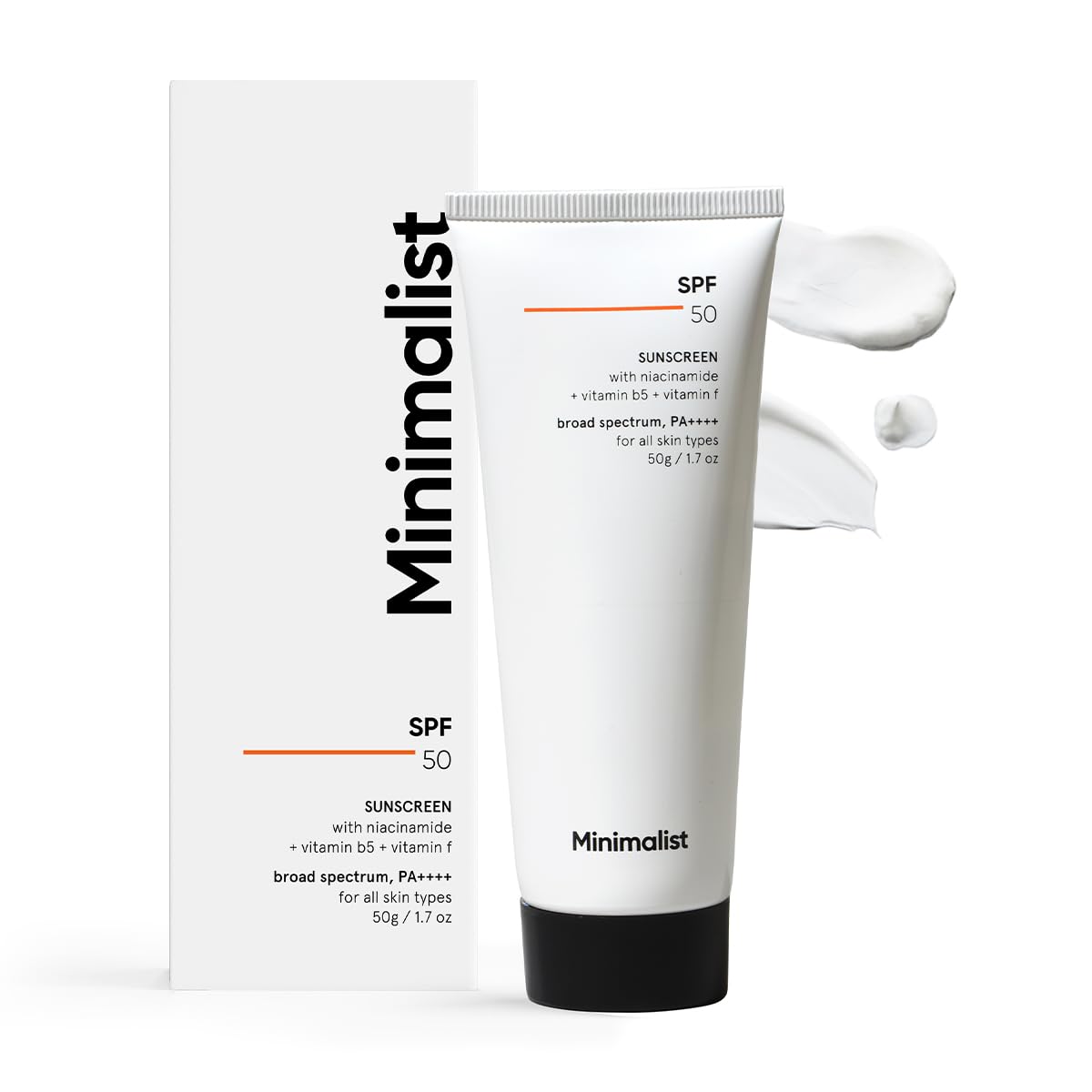
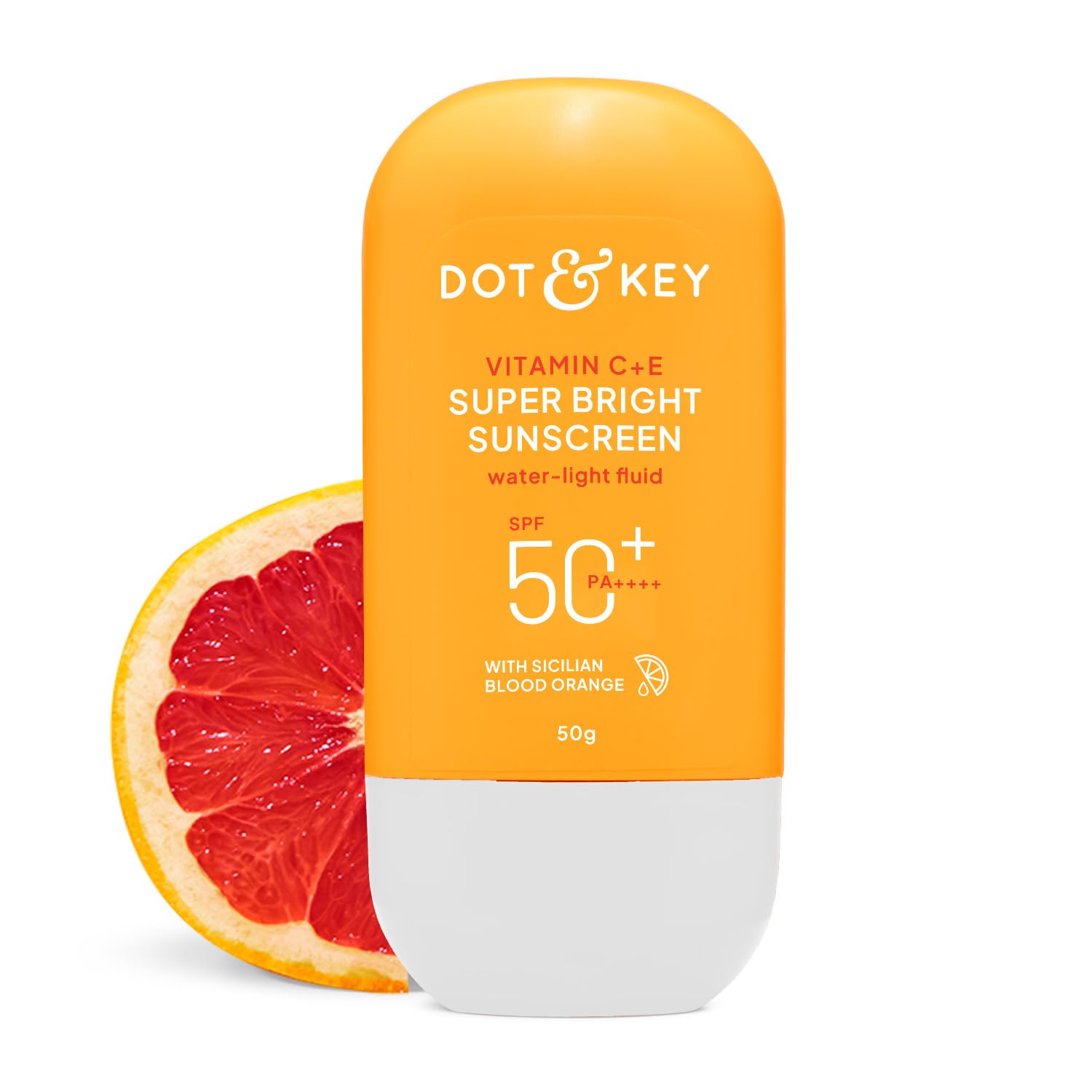
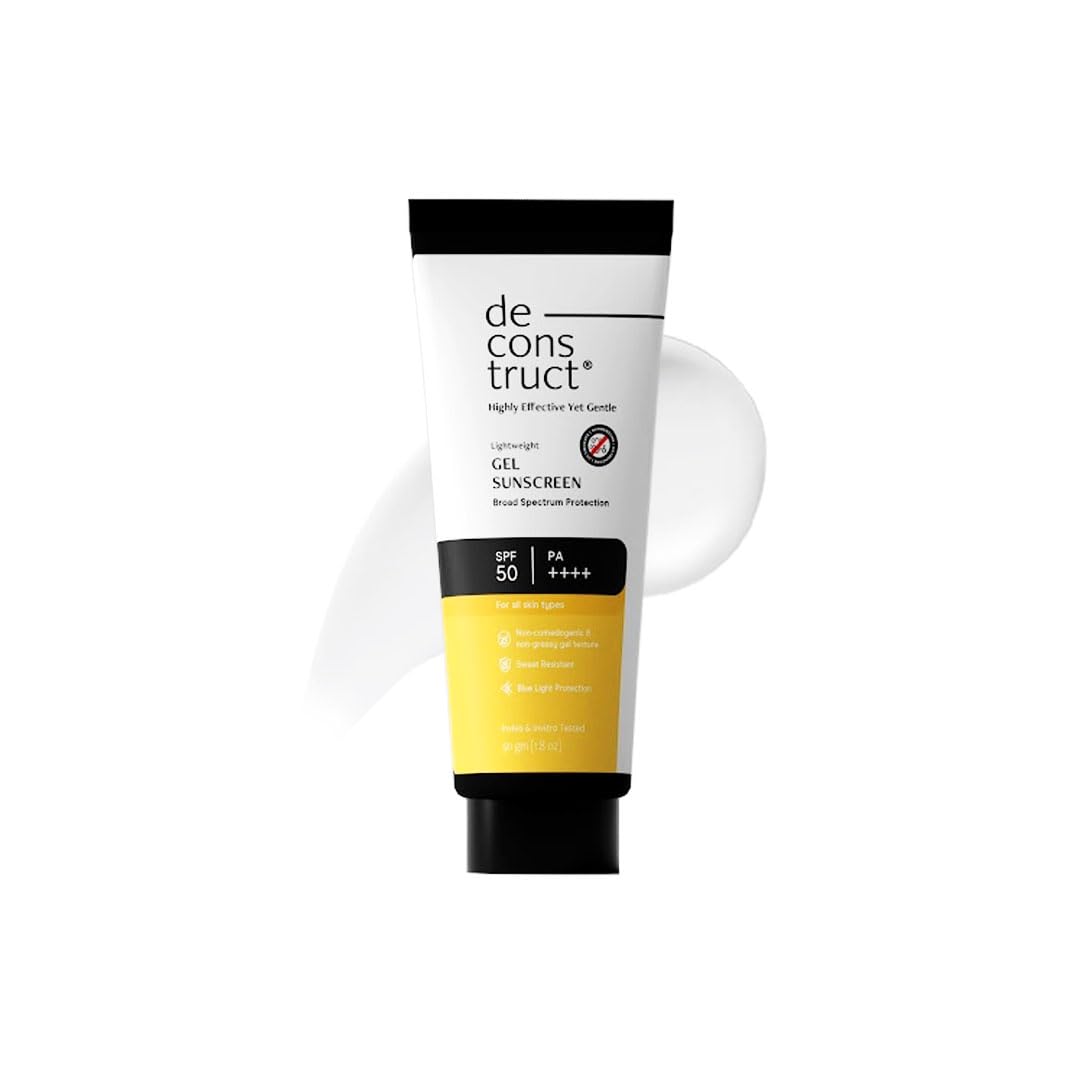
✓Top picks: Minimalist SPF 50 (₹379, best value), Dot & Key Vitamin C SPF 50 (₹595, best brightening), Deconstruct Gel SPF 50 (₹329, most mattifying)
✓Apply 2 finger-lengths for face + neck — most Indians under-apply by 50%
✓Reapply every 2–3 hours outdoors. At minimum, reapply once at lunchtime if near windows
Why Oily Skin Needs a Different Sunscreen
Oily skin already produces excess sebum throughout the day. A traditional cream or lotion sunscreen adds another layer of oil on top — creating a shiny, heavy feel that clogs pores and triggers breakouts. This is why so many Indians with oily skin have a terrible relationship with SPF.
The solution is texture innovation. Indian and Korean brands have developed gel, fluid, and aqua-based sunscreens that deliver SPF 50 protection while feeling like a lightweight moisturiser. These formulas use new-generation UV filters (like Tinosorb S, Uvinul A Plus, and Uvinul T 150) that are more photostable and less greasy than older filters.
Gel texture: Water-based, absorbs fast, matte finish. Best for very oily skin. Example: Deconstruct Gel SPF 50
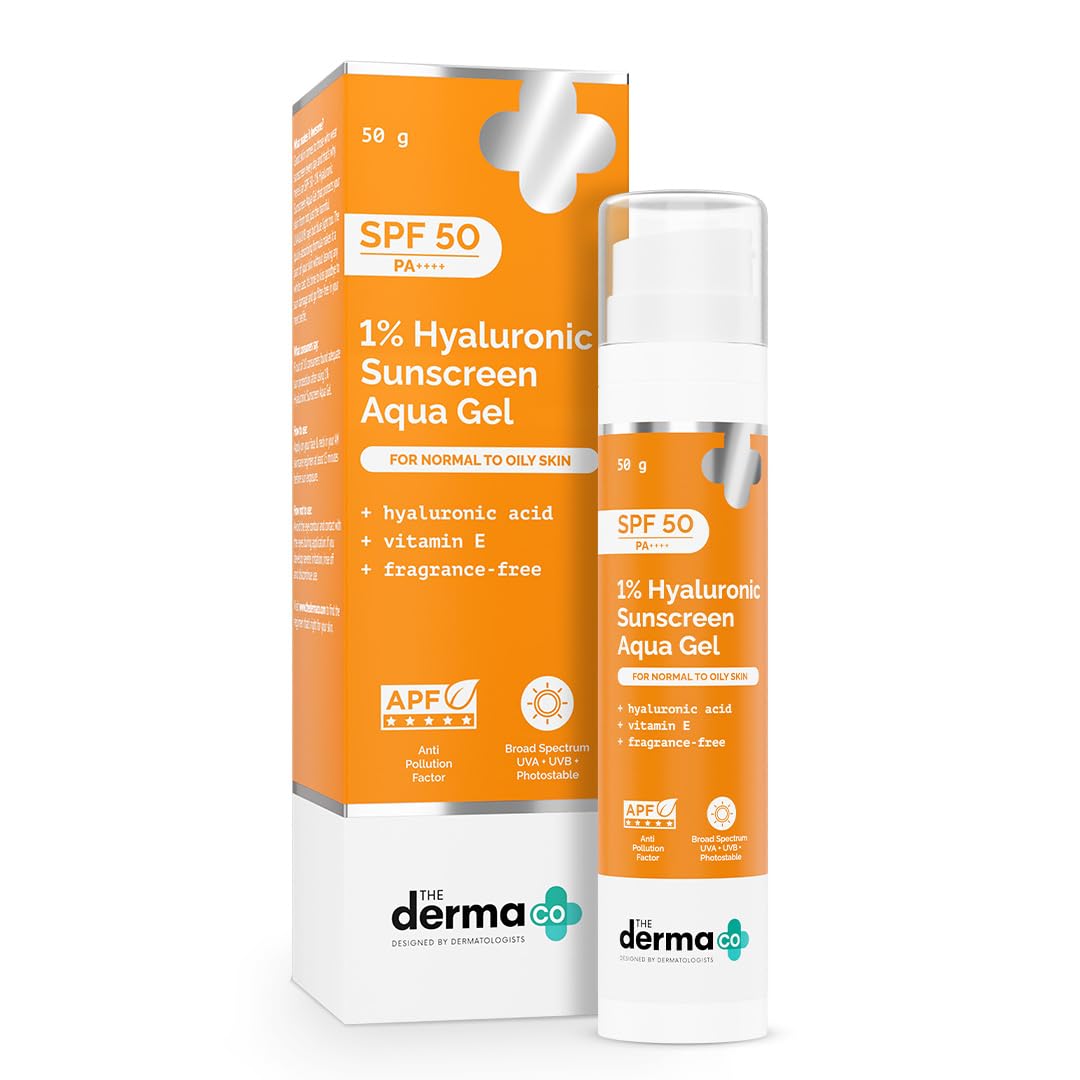
Aqua gel: Slightly more hydrating than pure gels, silky feel. Best for oily-combination skin. Example: Derma Co 1% Hyaluronic Sunscreen
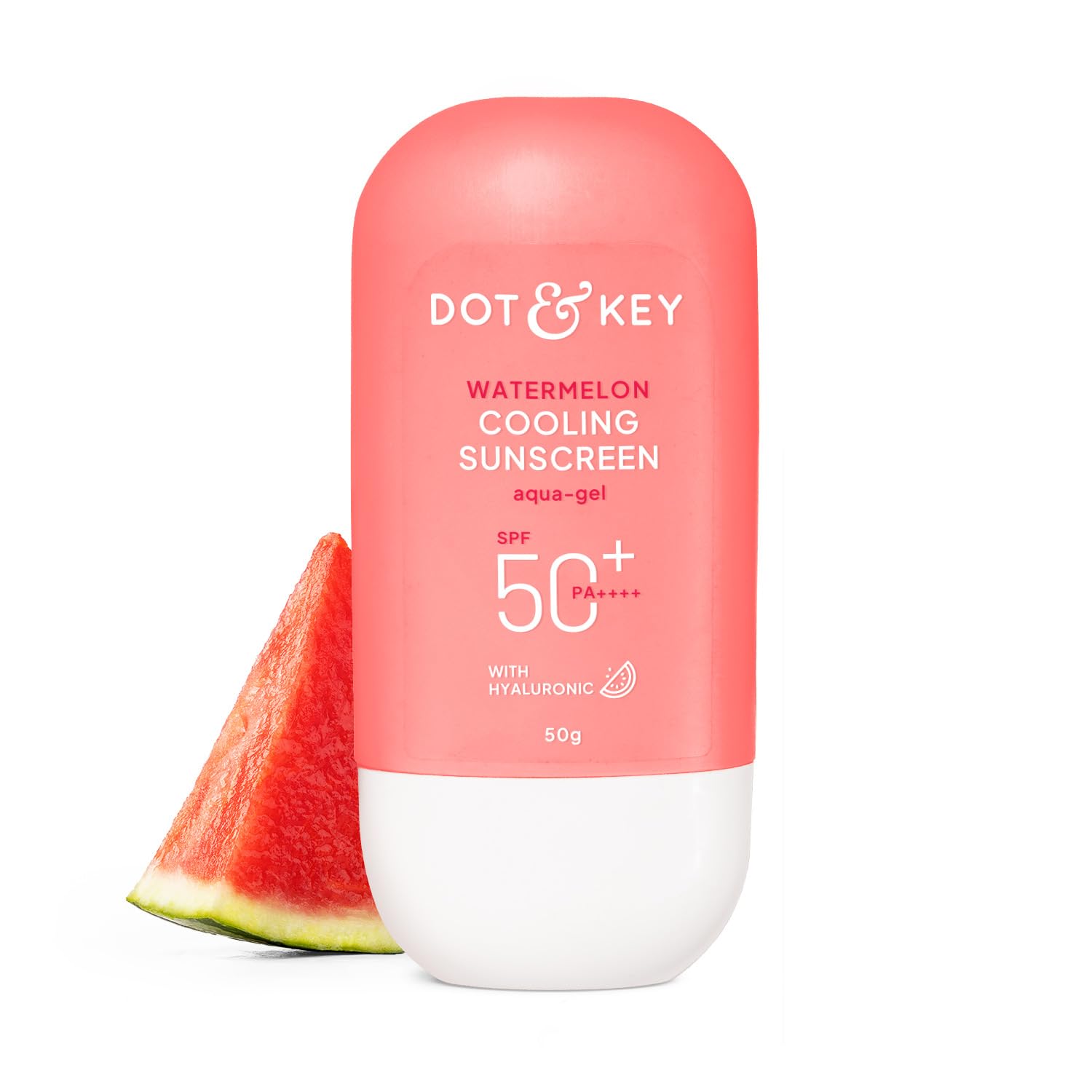
Fluid/serum: Runny, lightweight, disappears into skin. Best for all oily types. Example: Dot & Key Vitamin C SPF 50
Cream: Thick, moisturising — generally NOT recommended for oily skin unless labelled 'acne-safe'. Example: Minimalist SPF 50 Cream (formulated to be non-comedogenic)
What to Look for on the Label
Indian sunscreen labels can be confusing. Here is exactly what to check before buying:
SPF 50 minimum — SPF 30 blocks 97% of UVB, SPF 50 blocks 98%. The marginal 1% matters with Indian sun intensity
PA++++ rating — this measures UVA protection. UVA causes pigmentation and ageing. PA++++ is the highest grade available
Broad spectrum — protects against both UVA and UVB. All PA-rated sunscreens are broad spectrum by definition
Non-comedogenic — will not clog pores. Essential for acne-prone skin. If it is not on the label, check the ingredient list for known comedogenic ingredients (coconut oil, isopropyl myristate)
No white cast — this is usually mentioned on the front of Indian sunscreens now. Mineral sunscreens (zinc oxide) leave white cast; chemical and hybrid filters do not
Water-resistant — if you sweat a lot (gym, outdoor work), look for this claim. Note: no sunscreen is waterproof, only water-resistant for 40–80 minutes
The 5 Best Sunscreens for Oily Skin (2026)
These picks are ranked based on formulation quality, matte finish, white cast performance, SPF/PA rating, price per gram, and user reviews from verified Amazon purchases.
Texture: Lightweight cream that absorbs to a semi-matte finish
White cast: Zero — transparent on all Indian skin tones including deeper complexions
UV filters: Multi-vitamin enriched with broad spectrum new-gen filters
Acne-safe: Yes — non-comedogenic, fragrance-free
Best for: Oily and combination skin, daily office/indoor use
Price per gram: ₹7.58 — best value in this list
Verdict: The default recommendation for anyone starting a sunscreen habit. No fragrance, no frills, just solid broad-spectrum protection at the lowest price per gram
Texture: True gel — lightweight, airy, not a cream pretending to be a gel
White cast: Zero. 100% photostable formula means it stays effective all day
UV filters: 4 new-generation UV filters — the most advanced filter system on this list
Finish: Most matte finish of all picks. Genuinely controls oil for 4–5 hours
Best for: Very oily skin, humid climates (Mumbai, Chennai, Kolkata), under makeup
Price per gram: ₹6.58 — cheapest on this list
Verdict: If your primary concern is greasiness and you want the most matte possible finish, this is the one. 100% photostable means no reapplication anxiety
Texture: Aqua gel — slightly more hydrating than Deconstruct but still lightweight
White cast: None — specifically tested in-vivo for Indian skin tones
UV filters: Broad spectrum PA++++ with 1% Hyaluronic Acid for hydration
Unique angle: Hydrating sunscreen that works for oily skin — sounds contradictory but HA draws moisture without adding oil
Clinically tested: In-vivo tested (tested on human skin, not just lab) — verified SPF claims
Best for: Oily-combination skin that also gets dehydrated (tight feeling + oily T-zone)
Verdict: The bridge between oily and dehydrated. If your skin is oily but still feels tight after washing, the hyaluronic acid makes this a smart choice
5. Minimalist Cream Sunscreen SPF 50 (Alternate)
For those who prefer cream textures but still have oily skin — the Minimalist SPF 50 Cream is specifically formulated to be acne-safe. The cream base provides slightly more hydration than gel formulas, making it ideal for oily-combination skin in air-conditioned environments (offices, malls) where skin gets oily but also dehydrated from AC.
How to Apply Sunscreen on Oily Skin (Without It Sliding Off)
Application technique matters as much as the product itself. Follow these steps for maximum protection with minimum greasiness:
Step 1: Start with a clean, dry face. Use a gentle cleanser (not a scrub) and pat dry completely
Step 2: Apply a lightweight moisturiser or niacinamide serum first. Counterintuitive but this creates a base layer that helps sunscreen grip better
Step 3: Squeeze out 2 finger-lengths (index + middle finger) of sunscreen. This is the clinically tested amount for face + neck. Yes, it looks like a lot
Step 4: Dot on forehead, both cheeks, nose, and chin. Spread with upward and outward strokes — do NOT rub aggressively
Step 5: Wait 2–3 minutes before applying makeup or touching your face. This allows the sunscreen film to set
Step 6: For extra matte finish, dust a translucent setting powder on top (Innisfree No Sebum Mineral Powder works well)
💡
The 'two finger-length' rule: squeeze sunscreen along your index and middle finger from the crease to the fingertip. That is approximately 1ml — the exact amount used in SPF testing. Using less means your actual protection is lower than what the label says. Most Indians use only 0.3–0.5ml, which drops SPF 50 to effectively SPF 15–20.
When and How Often to Reapply
Sunscreen is not a one-and-done product. UV filters degrade with sun exposure, sweat, and friction (touching your face, phone calls, masks).
Office workers (mostly indoor): Apply once in the morning + reapply at 1 PM if near windows. If your office has no windows near your desk, morning application is sufficient
Students/commuters: Apply before leaving home + reapply after any outdoor exposure longer than 30 minutes
Outdoor workers: Every 2 hours without exception. Use a water-resistant formula and carry a travel-size tube
Gym-goers: Apply before workout if near windows. Reapply after shower post-workout
Reapply hack: Sunscreen setting sprays (Minimalist, La Shield) are convenient for reapplication over makeup without disturbing it
⚠️
The biggest SPF myth in India: 'It is cloudy so I do not need sunscreen.' UVA rays penetrate clouds, glass, and thin clothing. 80% of UV radiation reaches the ground even on overcast days. If it is daytime and you can see, UV is reaching your skin.
Sunscreen Mistakes That Cause Breakouts
If sunscreen is breaking you out, it is almost certainly one of these issues — not sunscreen itself:
Wrong texture: Cream sunscreens on very oily skin will clog pores. Switch to gel or fluid formulas
Not removing sunscreen properly at night: SPF products are designed to be film-forming and stay on skin. A regular face wash is not enough — double cleanse with micellar water or cleansing oil first, then your regular face wash
Using expired sunscreen: Check the expiry date. UV filters degrade over time and expired sunscreen sits on skin like a comedogenic film with zero UV protection
Applying too much at once without letting it absorb: Apply in thin layers. Dot and spread, wait 1 minute, then add another thin layer if needed
Using body sunscreen on your face: Body sunscreens are not formulated for facial skin sensitivity. Always use a face-specific formula
Price Comparison — Value per Gram
When comparing sunscreens, price per gram is the only fair metric since tube sizes vary:
Deconstruct Gel SPF 50 — ₹329/50g = ₹6.58 per gram (BEST VALUE)
Minimalist SPF 50 Cream — ₹379/50g = ₹7.58 per gram
The Derma Co HA SPF 50 — ₹383/50g = ₹7.66 per gram
Dot & Key Vitamin C SPF 50 — ₹595/50g = ₹11.90 per gram (PREMIUM)
For reference: La Roche-Posay Anthelios SPF 50 — ₹1,599/50ml ≈ ₹32 per ml (luxury tier)
ℹ️
At 1ml per application (2 finger-lengths), a 50g tube lasts roughly 40–50 applications — about 6–7 weeks of daily use. Budget approximately ₹600–700 per year on sunscreen if using solely Indian brands. That is less than a single professional facial and infinitely more effective for your skin.
The Verdict
If you have oily skin and have been avoiding sunscreen because of white cast and greasiness, 2026 Indian sunscreen formulas have solved both problems. The Deconstruct Gel at ₹329 delivers the most matte finish at the lowest price. The Minimalist SPF 50 offers the best all-round value with a versatile cream texture. The Dot & Key is worth the premium if you want built-in brightening.
Whichever you choose, the most important thing is wearing it every single day. An ₹329 sunscreen applied daily will do more for your skin than a ₹3,000 serum used without SPF. Start tomorrow morning.