CeraVe and Cetaphil are the two brands every American dermatologist reaches for first, and most people assume they're basically interchangeable — both cheap, both fragrance-free, both sitting in the same drugstore aisle. They're not built the same way. CeraVe leans on a patented ceramide-delivery technology and a much wider active-ingredient lineup; Cetaphil leans on a much longer track record of extremely minimal, no-frills formulas. This guide breaks down exactly where each one wins.
TL;DR — Quick Summary
✓CeraVe's signature is MVE technology + 3 ceramides per product — better for active barrier repair and eczema-prone skin
✓Cetaphil's signature is decades of ultra-minimal formulas — better for extremely reactive, easily-irritated skin
✓Both have products on the National Eczema Association's accepted list, but CeraVe's are more ceramide-dense
✓CeraVe has a far bigger range of actives — retinol, multiple BPO strengths, vitamin C, niacinamide, many sunscreen formats
✓Cetaphil's standout niche pick: its Gentle Exfoliating SA Cleanser, a 3-acid formula CeraVe has no direct equivalent for
✓Best strategy: CeraVe for barrier repair and actives, Cetaphil for the most easily-irritated skin in your routine
The Core Difference
CeraVe: Ceramide-Dense Barrier Repair
CeraVe was developed with dermatologists and built around its patented MVE (MultiVesicular Emulsion) technology, which releases ceramides, cholesterol and fatty acids gradually over 24 hours. Every CeraVe product contains three essential ceramides (1, 3, 6-II) plus hyaluronic acid — dermatologists commonly point to CeraVe as the stronger pick specifically for dry, compromised, or eczema-prone skin.
Best for: dry, compromised, or barrier-damaged skin that needs active repair
Cetaphil: Minimal-Ingredient Simplicity
Cetaphil has been the default "my skin reacts to everything" recommendation for decades. Its formulas are deliberately shorter and simpler than CeraVe's — most Cetaphil products on the NEA's accepted list contain a single ceramide rather than three, prioritising a soothing, non-irritating feel over an active-ingredient-dense one.
Winner: CeraVe, on ceramide density — three ceramides vs Cetaphil's typical one. But if CeraVe's formula ever feels like "too much" on very reactive skin, Cetaphil's is the safer fallback, not a downgrade.
For Sensitive, Reactive or Eczema-Prone Skin
This is the closest head-to-head — both brands have cleansers on the National Eczema Association's Seal of Acceptance list.
Winner: tie, genuinely. Both are dermatologist-recommended and NEA-listed. CeraVe's extra ceramides give it a slight edge for confirmed eczema; Cetaphil's shorter ingredient list is the better first move if you don't yet know what's triggering your reactions.
For Acne-Prone Skin
Here the two brands aren't really comparable strength-for-strength — CeraVe's benzoyl peroxide cleanser is nearly four times the concentration of Cetaphil's.
10% BPO is a real, noticeably drying concentration — start with it every other day, not daily, unless your skin already tolerates benzoyl peroxide well. If 10% has burned you before, Cetaphil's 2.6% is a genuinely gentler way back in, not just a weaker marketing claim.
For Anti-Aging (or a Retinol Alternative)
CeraVe uses real encapsulated retinol; Cetaphil's answer is bakuchiol, a plant-derived retinol-alternative with a much lower irritation profile.
Winner: depends on tolerance. If your skin handles retinol fine, CeraVe's encapsulated version is the more proven anti-aging active. If retinol has irritated you before, or you're pregnant/nursing and avoiding it, Cetaphil's bakuchiol serum is the sensible substitute — genuinely different mechanism, not just a diluted retinol.
For Exfoliation
This is Cetaphil's clearest win — CeraVe doesn't have a direct equivalent.
CeraVe's closest comparable product is its Acne Control Cleanser (2% salicylic acid) — but that's formulated specifically for acne, not general gentle exfoliation. If you just want a multi-acid exfoliating cleanser for texture and dullness rather than active breakouts, Cetaphil is the only one of the two brands that makes one.
For Sun Protection
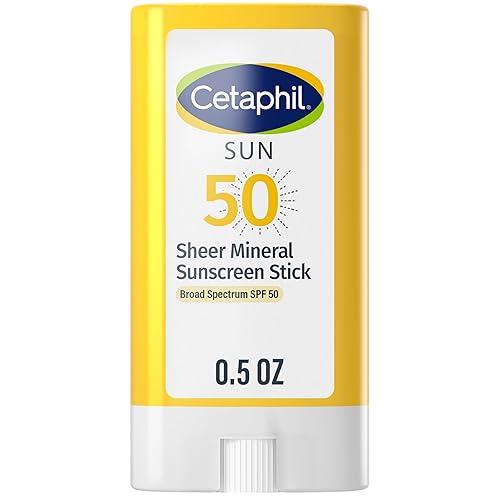
CeraVe simply has far more sunscreen formats — mineral sticks, tinted, sheer, invisible, ultra-light — while Cetaphil offers a single stick format.
Winner: CeraVe, decisively, purely on selection. If a stick format doesn't suit your routine — you want a lotion, a tinted finish, or something water-resistant for the beach — CeraVe is the only one of the two brands with an option to switch to.
Price Comparison
Both brands sit in the same rough price band — this is genuinely one of the closest-priced dermatologist-brand comparisons out there:
At the individual-product level, whichever is cheaper varies by SKU — check current prices before assuming either brand is the budget option
The Verdict
CeraVe is the stronger pick if you want active barrier repair — more ceramides per product, and a much deeper bench of actives (retinol, higher-strength BPO, a full sunscreen range) once your skin can tolerate them. Cetaphil is the stronger pick if your skin reacts to almost everything and you need the simplest, least eventful formula in your bathroom, or if you specifically want its multi-acid exfoliating cleanser or bakuchiol serum — both genuine niches CeraVe doesn't cover.
Neither brand replaces a dermatologist for persistent eczema, rosacea, or acne that isn't responding to OTC products — think of both as excellent daily-maintenance tools, not prescription-strength treatment.